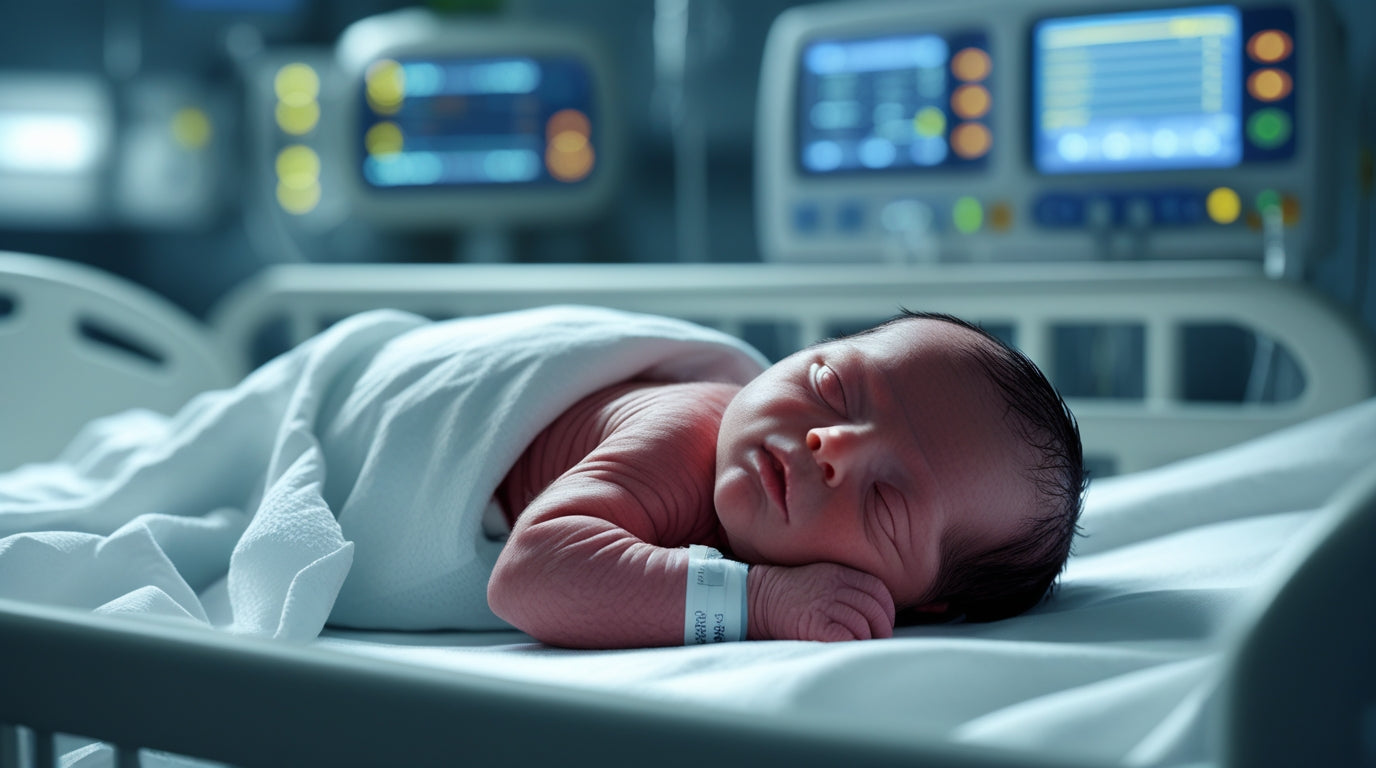


Your baby is exposed to numerous pathogens after birth: it leaves your protected womb and suddenly comes into contact with a wide variety of pathogens. However, it is protected against a large number of pathogens by the so-called nest protection. These are the mother's antibodies, which the baby is supplied with throughout the pregnancy.
In this article, you will find out exactly what nest protection is and which pathogens your baby is immune to after birth. We also summarize how long this protection lasts, how your vaccination status affects nest protection and whether breastfeeding has an impact on your baby's antibodies.
What is nest protection for newborns?
Your baby is protected from pathogens in your womb throughout the pregnancy. Although the baby's immune system begins to function before birth, it has not yet had to produce antibodies until birth. This changes abruptly on the day of birth.
So that your baby is not defenceless against the pathogens of the world, your body transfers your antibodies to your baby during pregnancy. From around the 20th week of pregnancy, this immunization progresses and your baby has more antibodies in its blood from day to day.
When it is born, it will therefore be immune to some bacteria and viruses and will therefore have short-term surrogate immunity. Premature babies usually have a slightly lower concentration of antibodies as they have had less time to absorb the mother's antibodies.
What diseases is the baby protected against?
After birth, your baby has immunity to diseases that you have already had. Your body has produced antibodies that are passed on from your blood to your baby. This also applies to diseases against which you have been vaccinated: the vaccination means that your body has formed antibodies against them.
Nest protection can therefore protect your baby from the following diseases after birth:
Diphtheria
Hepatitis A
Hepatitis B
measles
mumps
This protection usually lasts for the first few months of life before slowly fading over time. Your baby may also be immune to influenza and whooping cough thanks to the antibodies in the mother's blood. Your own immunization against these diseases is decisive for the strength of the nest protection.
However, there are also numerous infections from which your baby is not immune due to nest protection. These include meningococcus and pneumococcus.
How long does the nest protection work?
It is difficult to say in general terms how long your baby's body will remain protected. Generally speaking, the protection is strongest immediately after birth and is then gradually reduced. Your baby's immune system then starts to work independently and has to fight off the pathogens itself.
The decisive factor here is how strong the concentration of antibodies in your own body is during pregnancy. If your body has produced a particularly high level of antibodies against a certain disease, your baby will be immune to it for longer.
It also makes a difference whether you have experienced a disease as a mother or have only been vaccinated against it. This is because the antibodies are usually significantly higher after an infection than after a vaccination. This also affects the transfer of antibodies to your baby.
Nest protection will continue to decrease in the first year of your baby's life. It is strongest in the first three months after birth and then subsides. Doctors therefore recommend vaccinating babies in good time.
Free pregnancy checklist: https://tr.ee/vYGLT2poWs
When should babies be vaccinated?
In order to provide babies with the best possible protection against infectious diseases, they should be vaccinated before the nest protection has completely worn off. Although your baby's immune system begins to function in the womb, it still needs a certain amount of time to work properly.
During this phase, it can easily become infected with measles or chickenpox, for example. These diseases are highly contagious and therefore spread particularly quickly among children. They should not be underestimated, as even supposedly harmless illnesses can have serious consequences or even lead to death.
It is therefore advisable to follow the vaccination recommendations for young children. It is best to talk to your doctor and have all vaccinations carried out on time. This will ensure that your child develops the necessary antibodies quickly and is protected against persistent infectious diseases.
It may also make sense for the baby's close relatives to be vaccinated to minimize the risk of infection.
How do vaccinations of the mother affect the baby?
As the mother's immunity has a major influence on the newborn's protection against infection, the vaccination status during pregnancy is of great importance. The more antibodies you have, the better protected your baby will be after birth.
It may therefore be advisable to have important vaccinations boosted in advance if you are planning a pregnancy. This is usually easy to do at your GP: they can check your vaccination record to see whether your protection against measles or rubella needs to be refreshed. This service is usually also offered by gynecologists.
Some vaccinations are also recommended during pregnancy. This includes whooping cough: vaccinating the mother can reduce the risk of a fatal infection with whooping cough by around 95%.
The Standing Committee on Vaccination therefore recommends that expectant mothers be vaccinated against whooping cough. This should be given from the 28th week of pregnancy and should be boosted with every pregnancy.
Does breastfeeding provide better protection?
Nest protection is divided into two phases: The first phase occurs before birth, when the child receives the antibodies from the mother's blood. The breastfeeding period represents the second phase of nest protection.
This is because further antibodies are transferred to the baby during breastfeeding. This means that breast milk can also help to strengthen your baby's immune system. Doctors therefore say that breastfed babies are better protected against infections.
Foremilk, also known as colostrum, is particularly valuable. It is produced in the first five days after birth and is particularly rich in antibodies. This means that further defenses can be transferred to the child.
However, newborns receive fewer antibodies through breast milk than through the umbilical cord. The milk does not enter the baby's bloodstream, but only the intestines. But even there, the baby can absorb further antibodies that will have a positive effect on its immune system.
Spring cradle from swing2sleep: Natural sleep aid for your baby
Restful sleep is also important for your baby's development. When your baby sleeps, it processes the impressions of the day and continues to develop. However, many newborns find it difficult to fall asleep and sleep restfully through the night.
That's why we developed the swing2sleep cradle. Your baby lies snuggled up in a hammock while the spring cradle motor rocks them to sleep with gentle up and down movements. This not only makes it easier to fall asleep: your baby can also sleep through the night better. This ensures relaxing moments for your baby, but also for you as parents.
Conveniently, you can easily control the cradle via app and receive push notifications when your baby wakes up. Thanks to the motion sensors, the cradle can adapt its intensity to your baby and rock them back to sleep shortly before they wake up.
The swing2sleep cradle has already inspired more than 192,000 families. Take a look and see for yourself!