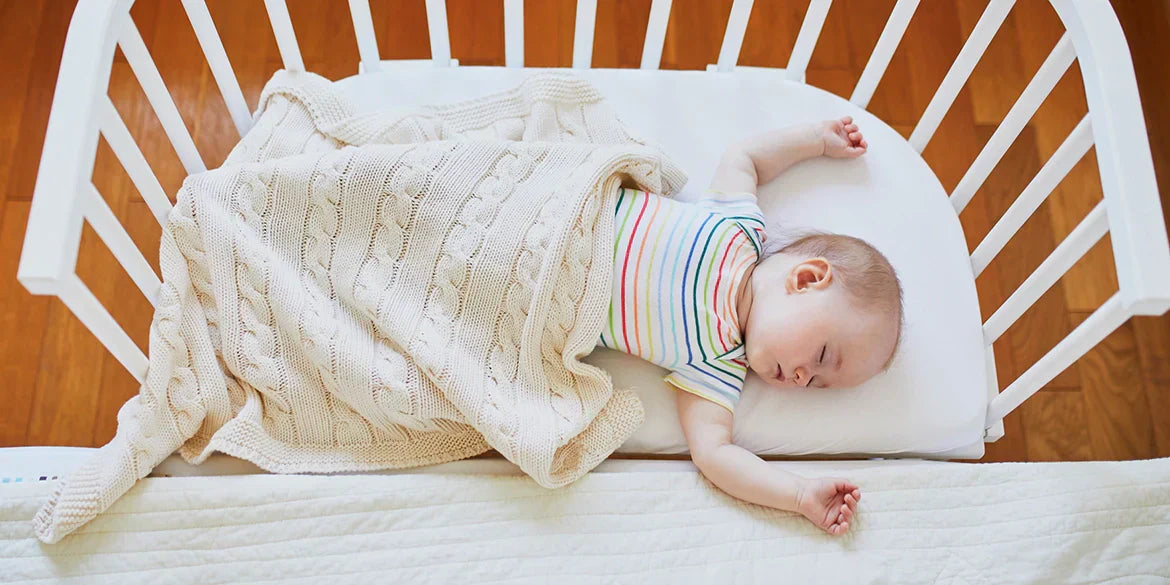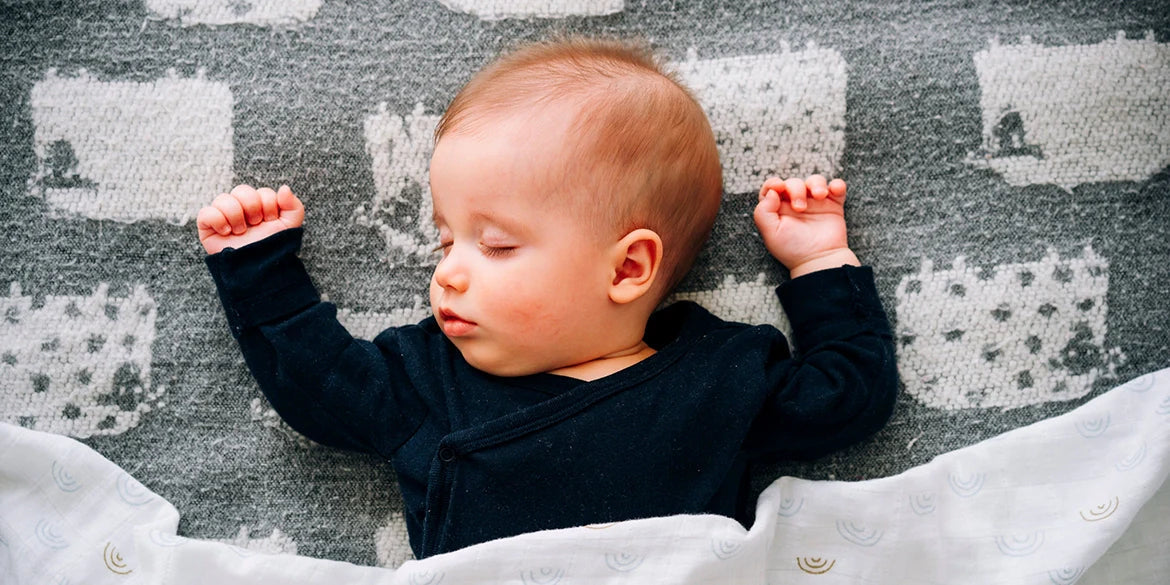


Even if newborns sleep a lot right from the start, it will probably be a few months before your baby can sleep through the night - i.e. sleep between 6 and 8 hours at a time. Sleep is important and mothers in particular have too little of it in the first few months of a baby's life.
But sleeping through the night has something to do with brain maturity and is a learning process that your baby has to go through. To make your nights easier and help your baby sleep through the night, we have collected 6 helpful tips.
With our tricks, you will soon achieve more baby sleep and also a fixed sleep rhythm that will help your baby to sleep through the night better.
Quieter nights with a baby - when do babies start sleeping through the night?
After weeks of waking through the night, many parents wish their baby would finally sleep through the night. However, experience shows that you need to be a little patient. There are some "seven-sleeper" children who can sleep through the night quickly and, above all, all by themselves.
However, this is not the rule. Until the end of the first year of life, babies' sleep cycles are very short, even if their sleep requirement is rather high at 14 hours. Waking up at night is common and completely normal and sleeping through the night is unthinkable for some babies before the age of six months.
Falling asleep and sleeping through the night
The term "sleeping through the night" is a little misleading. Sleeping through the night does not necessarily mean that your baby sleeps for a full six to eight hours at a time.
Rather, it means that your child develops a regular day-night rhythm from around the age of six months and, if they wake up at night, is able to fall asleep again without help from their parents.
Some babies learn on their own that the night is for sleeping, while others need a little more support. In any case, you should be patient with your baby. Don't expect too much, because sleeping through the night is a big and important developmental step in your child's life.
It doesn't happen overnight, but when your baby is ready. In order to still get enough sleep and make the day-night transition easier for your baby, we have some tricks to help your baby sleep through the night.
1. don't listen to the stories and rumors
All new parents are familiar with this: the supposed success stories of other couples whose baby falls asleep on their own without any problems, sleeps through the night, sleeps in a different room. Don't let this put you under pressure. As with all things in a child's life, it has its own developmental rhythm when it comes to sleep. It is a maturing process.
There are many myths circulating in playgroups and on the internet about the role of nutrition and night-time meals. The rumor that bottle-fed children sleep better than breastfed children, for example, has been around for decades.
And you've probably already guessed it: regardless of whether your baby is breastfed or bottle-fed, neither has anything to do with your little one's sleep. Even evening feeds have no major effect on a baby's sleep patterns.
Plus: There will always be restless sleep phases, whether due to a developmental spurt, overtiredness, vaccinations or an infection that is keeping the little body busy.
2. fixed routines
Babies like routines. A consistent and stable daily rhythm structures your little one's everyday life. This gives them a sense of security. So try to stick to similar times foryour daily meal, play and bedtimes. Also make sure you have enough rest periods during the day where you and your child can relax together.
What may sound exhausting at first, because establishing new routines can be tedious and feel like it's all for nothing, will help your baby and therefore you too to establish a regular sleep-wake rhythm.
3. develop bedtime rituals
A fixed bedtime ritual before going to bed will help your child to differentiate between day and night. Be sure to pay attention to your little one's sleepiness signals. Is it yawning or rubbing its eyes?
Then it's time for your bedtime ritual. Dim the light, snuggle up to your child for a while, read to them or sing the same bedtime song over and over again. These are all signals to your baby that it's time to go to sleep. Try to maintain fixed times here too.
You should give your little one your undivided attention. Also make sure that you put your baby to bed tired, but still awake, so that they experience it as a calm and safe place.
Conversely, you should only sleep in bed and not play. It often helps to give your child sleep aids that they can then use independently to calm themselves down.
This can be a cuddly toy or a pacifier, but also a story while he or she gently rocks up and down in the swing2sleep and comes to rest.
4. end daytime sleep on time
Sleep is not only important for you, but also for your baby's development. As the saying goes, daytime sleep determines night-time sleep. However, this doesn't just mean that your baby should get enough sleep during the day.
It also means that the last daytime nap should not be too late so that it is easier for your child to go to bed. It is very helpful if your baby has finished their last nap during the day about three to four hours before going to bed. Of course, this does not apply to newborns: babies are still allowed to sleep according to their own rhythm.

5. timing mealtimes
Of course, your little one should be full at the last meal in the evening and have had enough to drink when breastfeeding or giving a bottle. Many babies are hungry at night.
Some parents also swear by breastfeeding again between 10 p.m. and midnight and letting their child drink plenty before going to bed. With bottle-fed children, care should be taken to ensure that the child is really awake during feeding to avoid aspiration and overfeeding.
The time until the next meal will be a little longer and you will also get several hours of sleep in a row. As a rule, the time until the next meal will increase as your baby gets older anyway, because your child can increase their food intake during the day.
6. provide the right sleeping environment
A darkened room is certainly always helpful so that your baby can sleep for several hours at a time - or learn to do so over time. But not all children like complete darkness.
A small night light can help here. The room temperature is also crucial; it should be between 16 and 18 degrees Celsius. Admittedly: This is not always possible at the height of summer. It can be warmer in the room and disturb your baby's sleep.
A good fan or a smart ventilation strategy can provide some relief. Find outwhat else you can do for your baby in the heat in this article. Some babies need a quiet background noise, others like white noise in the background.
Try out what works best for you as a family. In general, it should be as quiet as possible so that your baby doesn't wake up at night.
What to do if the baby wakes up at night?
First of all: there is no right or wrong here. However, you should think about a consistent strategy for what to do if your baby always wakes up at night, as this is also a habituation process. It helps if you soothe your child by stroking them or gently placing the flat of your hand on their chest. This lets them know that you are there, even if they are in their own bed.
Many sleep advisors also recommend not simply picking your child up and, of course, not playing, cuddling or singing too much. This makes your baby happy, but not sleepy. If possible, leave him in bed, touch him and talk to him quietly and soothingly.
More physical contact is usually not necessary, but this also depends on the child. When babies should sleep in their own bed is individual, some babies always wake up at night because they miss the closeness of their parents, others manage to sleep well for several hours at a time when they have their peace and quiet.
However, children should sleep in their own room from the age of 1 at the earliest.
If your baby doesn't settle down, he or she may have to burp. To do this, you can pick him up slowly and with a firm grip, burp him and put him down again just as calmly. If your baby is hungry, it's good to feed them calmly, without fussing or playing with them.
So that you don't have to switch on a light, we recommend simply leaving the little night lamp from your bedtime ritual on overnight. By the way: Changing diapers at night should no longer be necessary after a few weeks or months of your little one's life.
Unless your child has had a bowel movement. Then the diaper change should take place as calmly as possible, preferably in bed, so that your baby doesn't become wide awake.
Falling asleep and staying asleep for babies
Finally, it should be mentioned once again: all these tips can help your baby to sleep through the night. However, there is no one-size-fits-all recipe that can promise success across the board. That's why it's especially important that you give yourself and your baby time and patience.
Of course, life always gets in the way. Long car journeys, trips and exciting visits can interrupt your family rhythm, and that's perfectly okay. However, it is important that you maintain your rituals as best you can and stick to them consistently on quiet days.
This will finally make it easier for your baby to learn to sleep through the night. And by 12 months at the latest, babies sleep for at least four hours at a time.
FAQ about getting your baby to sleep through the night
How do I get my baby to sleep through the night?
Babies learn to sleep through the night gradually. Fixed bedtimes, clear bedtime rituals, a quiet sleeping environment and recognizing signals of tiredness in good time help with this. Patience is important, as sleeping through the night depends heavily on the baby's neurological maturity and cannot be forced.
How long does it take for a baby to sleep through the night?
Many babies start to get longer periods of sleep in a row between the sixth and twelfth month of life. However, some take much longer. Sleeping through the night is not a fixed age, but an individual development process.
How long can a baby sleep without eating?
In the first few weeks of life, babies should be regularly breastfed or fed, even at night. As they get older, many babies can sleep for several hours without eating. Whether and for how long this is possible depends on the baby's age, weight and individual development and should be discussed with the midwife or pediatrician if in doubt.
What is the 2-3-4 rule for baby sleep?
The 2-3-4 rule describes the recommended waking times for babies with two daytime naps: around 2 hours awake before the first nap, 3 hours before the second and 4 hours before the night-time nap. It serves as a guide, but is no substitute for observing the child's individual sleepiness signals.