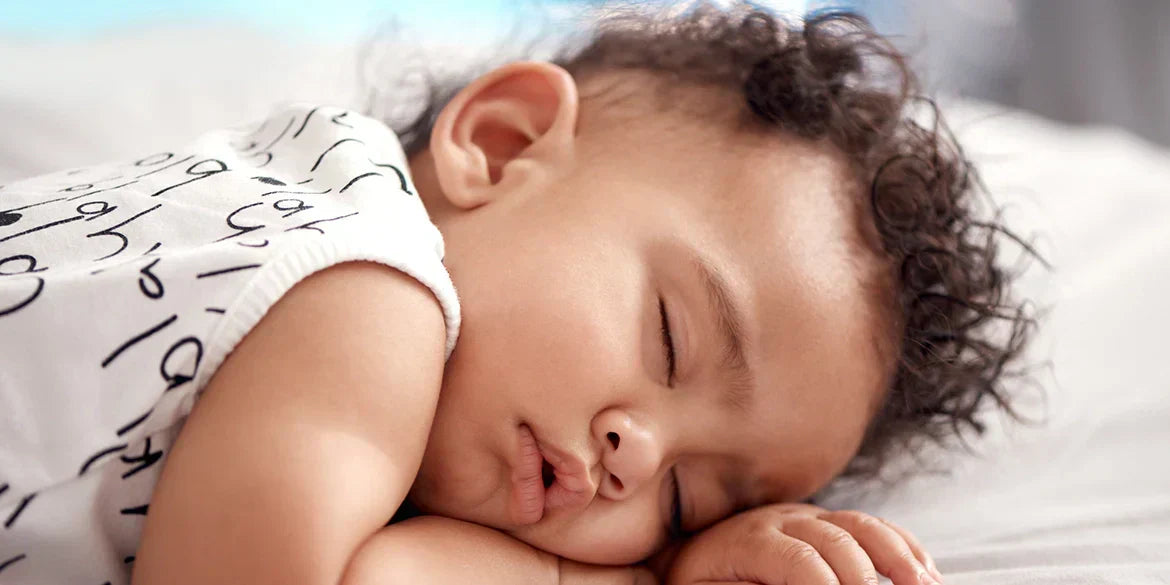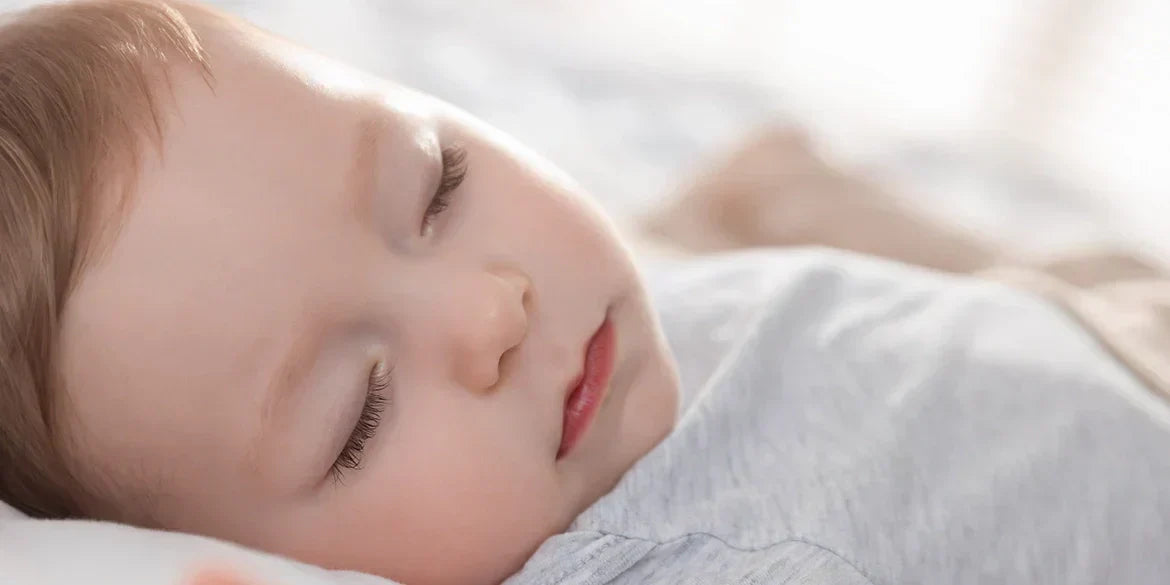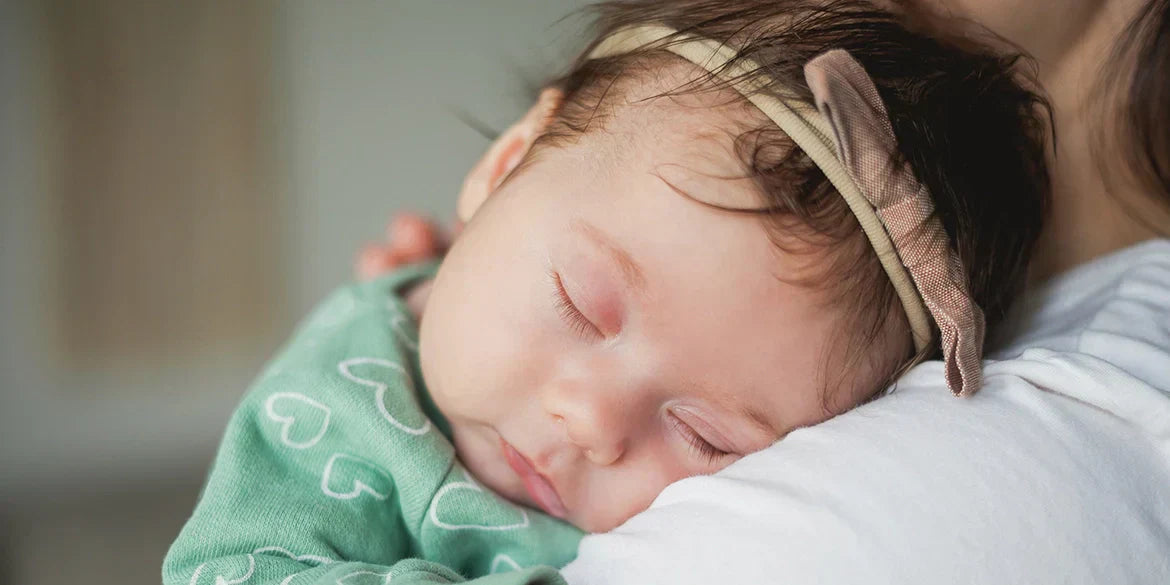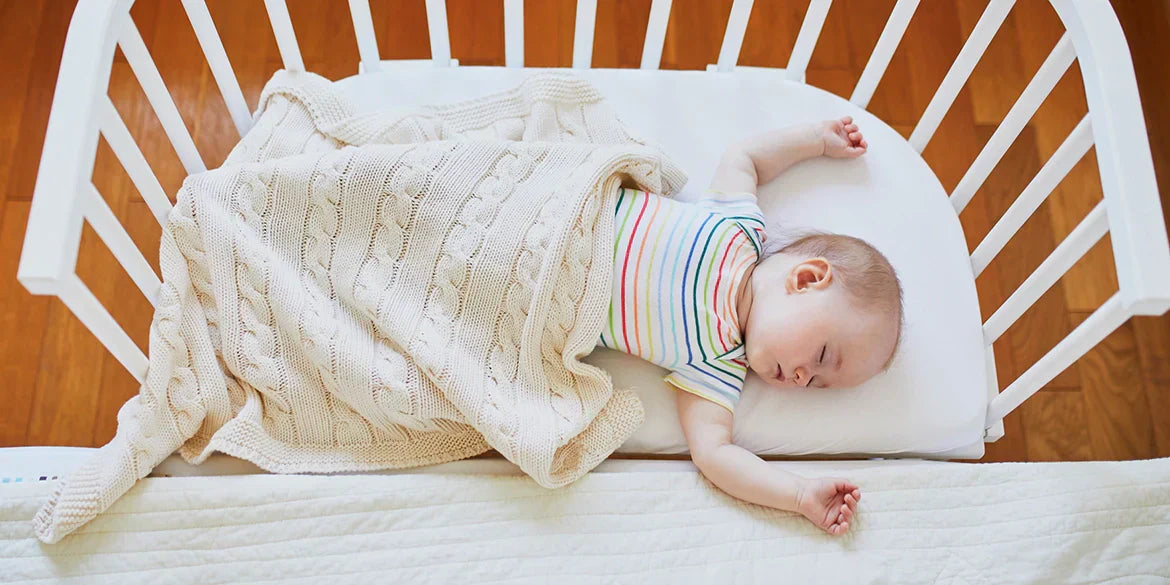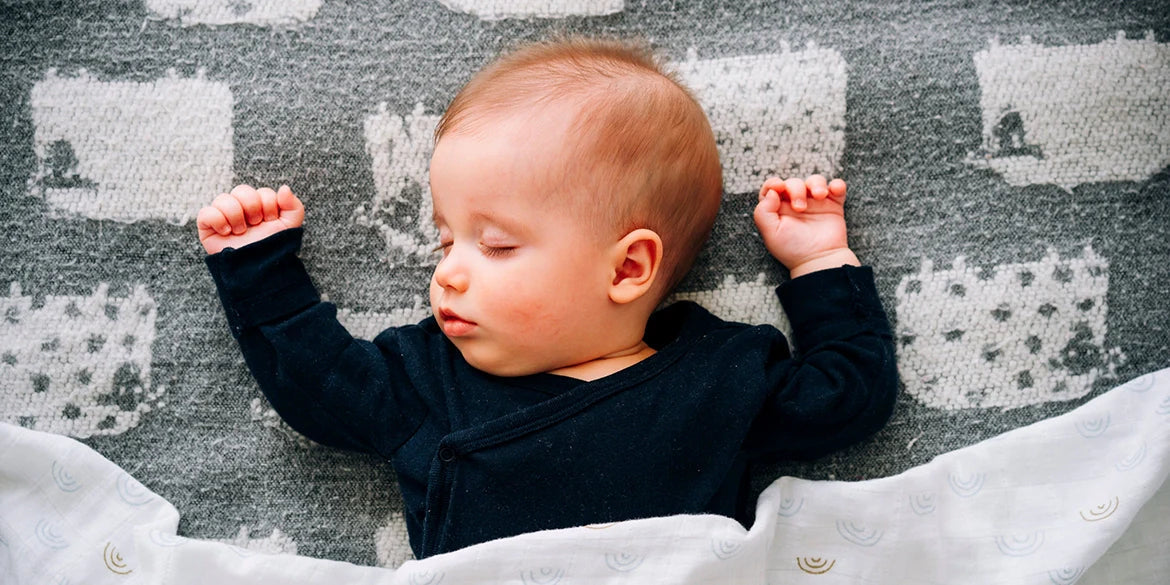


The sleeping behavior of babies is an important issue for many new parents. If your baby keeps waking up during the night, this can quickly become a huge burden. This also applies if your baby can only fall asleep on you and always needs physical contact to enter the land of dreams.
In this article, you can find out why your baby longs for physical contact when falling asleep, when you should take action and what tips can help you.
Baby only sleeps on me: possible reasons at a glance
It is not uncommon for babies to need physical contact to fall asleep . It is a deeply rooted need of all babies and is therefore completely natural.
Your baby has spent nine months in your womb. The safety and security it knows from its mother's womb may be missing after birth. It first has to get used to the world and therefore has problems falling asleep without the mother's closeness.
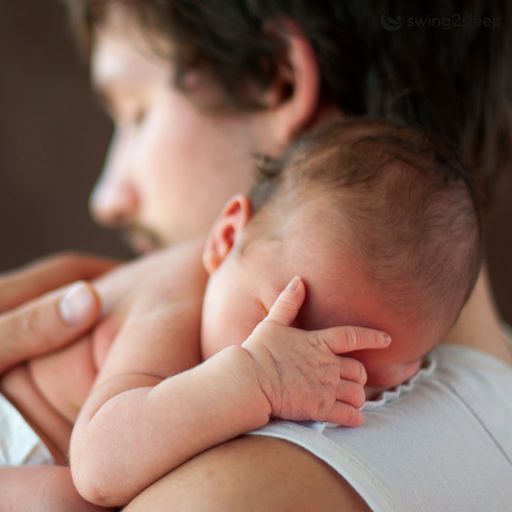
If you hold your baby in your arms and cuddle with it, the hormone oxytocin is released in your bodies. This is also known as the cuddle hormone and creates an even deeper bond between parents and babies.
At the same time, it also has a calming effect and can therefore help your baby to sleep. Inner restlessness and tension can also be relieved through physical contact.
As you can see, there are evolutionary reasons why your baby can only fall asleep on you in the first few months.
It helps many parents to keep this in mind: If your baby has difficulty falling asleep on their own, they are in no way trying to keep you awake or annoy you; rather, the desire for physical contact is a natural need and completely normal.

When should you do something?
In the first phase after the birth, it is a wonderful feeling for many parents when their newborn baby falls asleep on them. No doubt you also watch your baby sleeping peacefully almost every day.
In the long run, however, it can become a burden if your baby only falls asleep in your arms. Both mothers and fathers long for more sleep and want their offspring to be able to fall asleep without physical contact after a few months.
But when should you try to get your baby used to a crib or cradle? You should consider the needs of both you as parents and your baby and try to reconcile them.
If parents are completely exhausted because their baby can only sleep on them, then you could try to change the situation. This is not a sign of a lack of love - quite the opposite, because overtired parents are often less able to respond to their baby.
For your baby's well-being, you should therefore try to gently get them used to falling asleep without physical contact. If your baby is around six months old, you could make a first attempt. At around six months, many parents start to slowly get their baby used to falling asleep alone.
7 tips if your baby only falls asleep with physical contact
Does your baby only fall asleep with physical contact and you want to slowly get them used to their bed? For many parents, this is a drastic step that is often associated with mixed feelings.
On the one hand, they long for more sleep, but on the other hand, they don't want to make their baby feel bad or give them less love.
It is therefore important that you proceed with caution.
These seven tips can help you do this:
- Gently reduce physical contact: Don't start putting your baby to bed alone overnight. If it has only slept with physical contact so far, it will be frightened and probably not find its way to sleep. So proceed with caution and patience.
- Cuddles in the evening: If you want your baby to sleep without physical contact soon, you should postpone this cuddling time to another time. It can be helpful if you cuddle your baby extensively in the evening and then put them to sleep.
- Introduce sleep rituals: Rituals and routines are important for babies - they can even help them fall asleep and stay asleep. Therefore, try to always follow the same routine in the evening. Over time, even very active babies will develop a feeling that it is time to sleep.
- Ensure a good sleeping environment: To help your baby fall asleep peacefully, you should darken the room and avoid disturbing noises. At the same time, the room temperature also plays a decisive role, as it should never be too warm in the bedroom or nursery. Also avoid cuddly toys or toys in bed so that your baby is not distracted.
- Try out music boxes & music: Some children find it helps if they listen to a music box or music as they fall asleep. The sounds can have a calming effect on your baby and help them to fall asleep. Simply test out how your baby reacts to it.
- Give your baby time: Have you only laid your baby down for a short time and he or she starts crying? Frequent waking up is normal at the beginning if you want your baby to fall asleep without physical contact. If it doesn't want to sleep alone in its cozy bed despite a good sleeping environment, then perhaps the right time has not yet come.
- Don't lose patience: It can be tiring when babies wake up often and simply don't want to fall asleep on their own. This requires a lot of patience from you parents. Keep trying and encourage your baby to fall asleep in their bed without physical contact. Even if this can take a few weeks, the effort will be worth it.
If your baby only sleeps with physical contact, you have a long way to go before he will fall asleep on his own.
It might help you to see the change as a journey: There will be phases when your baby sleeps alone in their bed. At the same time, there will also be nights when your baby needs physical contact again.

Problems falling asleep: don't put your baby under pressure
As a mother or father, you should always keep in mind that your baby is going through an individual development. This may mean that your baby is already sleeping alone in their crib at 6 months. Other babies only manage to fall asleep without their parents at 9 months.
As with crawling, walking and talking, development varies from baby to baby. You should therefore always take your baby's needs into account.
If it is simply not yet ready to fall asleep without mom or dad, then you should not put it under pressure . It won't fall asleep any better if you try to force it to sleep without physical contact.
Spring cradle from swing2sleep: Sleep aid for restless babies
In the first few months of life, babies prefer to sleep with their parents, which is a completely natural need. If you would like to change the sleeping situation, you could rely on the swing2sleep cradle.
Many babies find it difficult to fall asleep in their bed, baby carriage or a traditional cradle. They don't know the feeling and don't feel secure. This is different with our swing cradle, because you place your baby in the cozy hammock.
There it is wrapped tightly around you: This feeling reminds your baby of its time in your womb.
It feels particularly safe and secure. This makes it much easier for them to nap and also encourages them to sleep through the night. Your baby can sleep for longer and the lack of sleep for you as parents can slowly reduce.
This is also ensured by the intelligent spring cradle motor, which rocks your baby to sleep with gentle up and down movements. The bassinet is equipped with sensors so that the motor can adapt its movements to your baby. If your baby wakes up, the motor adjusts the movement and your baby can continue to sleep.
The accompanying app not only allows you to control the cradle, but also informs you via push notifications when your baby wakes up. Test our spring cradle and convince yourself of its excellent effect, which has already inspired over 192,000 families.
FAQ: Baby only sleeps on me
What should I do if my baby only wants to sleep on me?
This is very common in the first few months because closeness provides security. If you want to change something, proceed in small steps: first let your baby fall asleep in your arms and then slowly put him or her down to sleep as soon as your baby seems sleepy. Consistent rituals, a calm environment and a transition that "takes away" closeness (e.g. hand on tummy, quiet talking, steady movement) are helpful.
What should I do if my baby only falls asleep on me or in my arms?
Look for an "intermediate step" instead of making the transition immediately: first soothe your baby in your arms, then switch to a familiar, confined sleeping environment and keep in touch briefly when you put your baby down. Many babies fall asleep more easily if you hit the sleepiness window and reduce the stimuli beforehand (dim the lights, quiet room, same sleep signal). If you are unsure whether pain, hunger or discomfort is the cause, a quick check of these basic needs before going to sleep will help.
Why not lift your baby under the armpits?
Many babies still have little stability in their shoulder girdle and neck. Lifting under the armpits can be uncomfortable because pressure is exerted on sensitive areas and the head is not reliably supported. It is safer to hold your baby with one hand on the neck and upper back and the other under the bottom or back so that the head, torso and hips remain well supported.
When can a baby sleep without body contact?
This is individual. Many babies become more open to it between the 4th and 8th month as their self-regulation and sleep cycles mature. The decisive factor is not so much a fixed age, but whether your baby calms down briefly after falling asleep without direct physical contact and whether you can make the transition gently. If you notice that you are both exhausted, it is worth training gently with small, repeatable steps instead of "overnight".
Why does my baby always wake up when I put him down?
A lot of things suddenly change when you put your baby down: temperature (arm warm, mattress cooler), body position, noises and movement stops. This can trigger the startle reflex or bring your baby out of a light sleep phase. It often helps to lay your baby down more slowly (first bottom, then back, then head), keep your hand on their body for a short time, continue to soothe them quietly and keep the sleeping environment as "calm" as possible (dimmed light, few stimuli, consistent ritual).