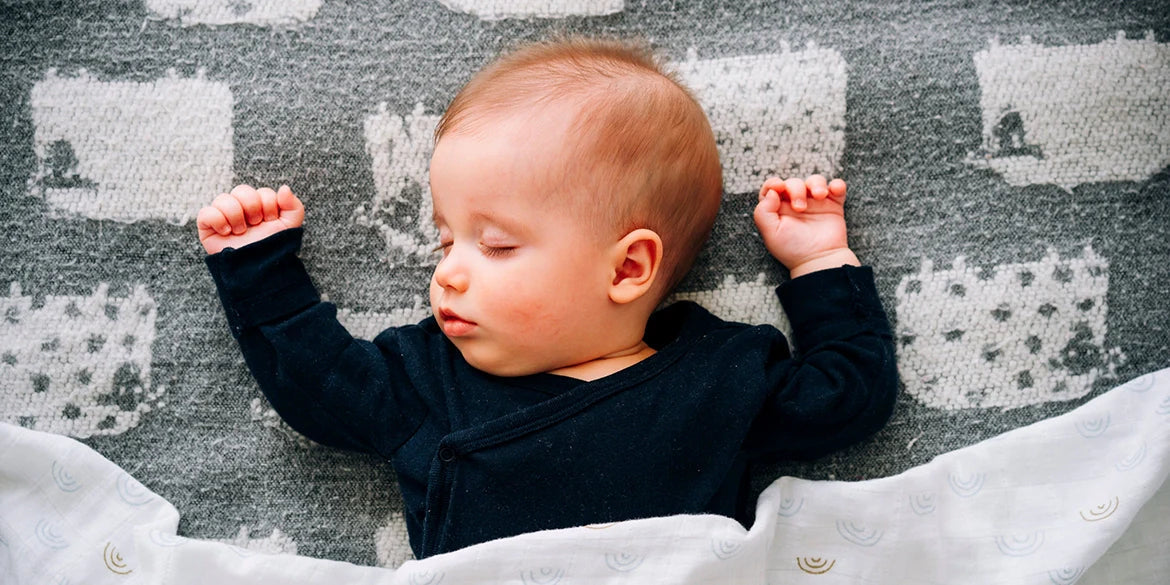


Is your baby sleeping restlessly? This can be a real challenge for new parents. The first few months with a baby are characterized by irregular sleep and unpredictable waking phases. Exhaustion and worries can put a strain on parents.
Until the first year of life, it is completely normal that not every sleep phase is the same. Sometimes your baby will find it difficult to rest. But what are the reasons why babies and toddlers don't settle down? What can you do if a baby sleeps restlessly and wakes up at night?
In this article, we look at the 7 most common reasons for restless sleep and introduce you to numerous proven methods to gently soothe your baby and ensure a calmer sleep. Completely without controversial sleep training or let scream.
Baby sleeps restlessly: 6 common reasons
Nothing is more grueling than sleep deprivation. Especially parents of babies who wake up frequently at night have to deal with the consequences. But if a baby wakes up at night, this is not unusual and can have various reasons. It is important to understand your child's needs and signals.
That's why we have summarized the 6 most common reasons that disturb babies' sleep here as a practical list for you.
- A hungry baby often wakes up at night: Hunger is often the main reason for newborns waking up and being restless. Their tiny stomachs can only hold a limited amount of food, which is why they often need to be fed. Hungry babies become restless and cry to draw attention to themselves.
- Pain or discomfort: Abdominal pain, bloating or teething are common complaints in newborns that can lead to restless sleep. This pain is often very uncomfortable for babies and can lead to them seeking comfort. Many parents are reluctant to give their child painkillers, but if the pain is disturbing your little one's sleep, it is perfectly okay to give your baby a painkiller. Of course, this should always be done in consultation with your pediatrician.
- The right sleeping environment: The environment in which the baby sleeps has a significant influence on the quality of sleep. Too much light, noise or the wrong room temperature can affect sleep; your baby may only eversleepfor a short time . A dark, quiet room with an appropriate temperature of around 18 degrees Celsius creates the best conditions for peaceful sleep. The baby should be optimally dressed for the room temperature .
- Need for closeness and comfort: Babies long for closeness and security. The womb was their first living space and the transition to the outside world can be frightening. The need for physical contact, touch and loving care is particularly pronounced in newborns. This is why some babies only sleep in their parents' arms .
- Immature sleep patterns: Newborns have not yet developed a regular sleep cycle and their understanding of the day-night cycle only emerges in the first few months of life. In most cases, their sleep is irregular and it can take some time before a regular sleep pattern is established. This means that babies can be awake at different times of the day and night.
- Sleep regression: There are certain phases that parents can recognize in their baby's sleep patterns. Sleep development regresses during these regression phases and your baby suddenly sleeps much more restlessly and worse than in the months before. But there is no need to worry, most babies quickly find their way back from the sleep regression.
Calming techniques for calmer baby sleep
The first few months with a baby are a time full of changes and challenges, especially when it comes to sleep. For new parents, the restlessness of baby sleep can sometimes be overwhelming.
But it's important to know that you're not alone, and there are proven techniques that can help your baby sleep more soundly. In this section, we would like to take a closer look at needs-based approaches to encourage you to cope with restless baby sleep.
Every baby is a unique individual with their own needs and preferences. What works for one baby may not work for another. It is therefore crucial to try out different techniques and pay attention to your baby's signals.
The spring cradle: a tried and tested method
The spring cradle, like our swing2sleep, is an excellent method for gently rocking your baby to sleep. It imitates the soothing movements that a baby experiences in the womb. The gentle rocking can soothe your baby and accompany them to sleep.
Here are some tips for using a feather cradle:
- Make sure the bassinet is secured in a sturdy and safe frame to avoid accidents.
- It is important that your baby lies safely and comfortably in the cradle without being constricted.
- The movements of the cradle should be even and gentle so as not to overstrain your baby. This is guaranteed by our adaptable spring system - can be easily controlled via app.
- The bassinet can be particularly useful for soothing your baby when they are restless or have difficulty falling asleep.
Breastfeeding or giving a bottle
Your baby's feeding needs are immediate and essential. If your baby is hungry, it will become restless and cry. Breastfeeding or bottle feeding provides an opportunity for close physical contact and emotional bonding between parent and child.
- You should make sure that your baby is well latched on in order to suckle efficiently and get enough milk.
- Use breastfeeding or bottle feeding as an opportunity to soothe and cuddle your baby.
- The closeness and physical contact during feeding can give your baby a feeling of safety and security.
Tummy rubs
Abdominal pain, bloating and colic are common complaints in newborns and can lead to restless sleep. Gentle clockwise abdominal massages can provide relief.
Here are some steps for a tummy rub:
- Wash your hands thoroughly and ensure a warm and relaxed environment.
- Apply a small amount of baby oil or baby cream to your hands to keep your baby's skin supple.
- Start near the navel and massage your baby's tummy in gentle, circular movements in a clockwise direction.
- It is essential not to apply too much pressure and to pay attention to your baby's reaction. If your baby seems restless or cries, you should stop the massage.
The pacifier
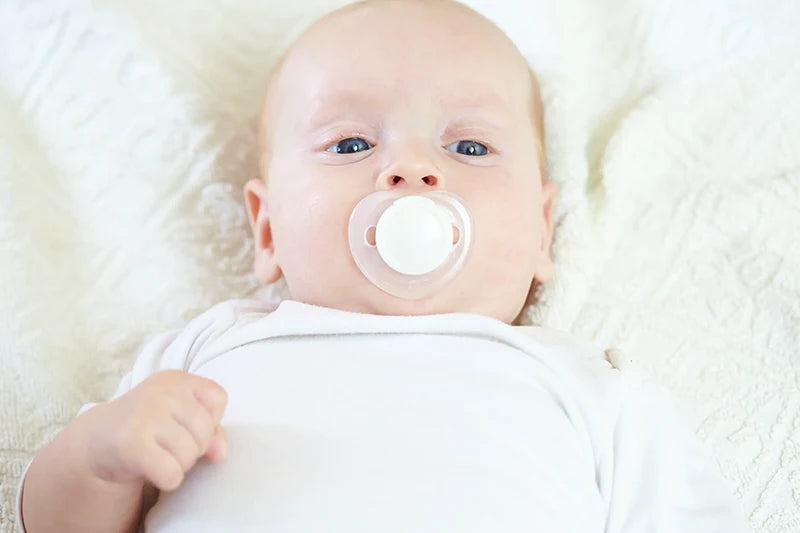
A soother can be a valuable tool for calming your baby. The sucking reflex is strong in newborns and a soother can satisfy this reflex and provide comfort.
- Make sure to use a clean and safe pacifier that meets hygienic standards.
- Offer the soother if your baby is restless or feels the need to suck.
- A pacifier can also be helpful to soothe your baby to sleep.
Calm environment
Your baby's sleeping environment has a significant influence on the quality of their sleep.
Here's how you can create an optimal sleeping environment for your little one:
- Darken your baby's bedroom to minimize the penetration of daylight. Use curtains or blinds to darken the room, especially when there is a full moon .
- Reduce noise and sounds in the environment. Avoid loud conversations and other noises that could disturb your sleep. White noise or other monotonous noises can make it easier for your little one to fall asleep.
- The room temperature should be appropriate, ideally around 18 degrees Celsius. A bedroom that is too warm or too cold can affect your baby's sleep.
Rocking and carrying
Many babies love to be rocked or carried to sleep. The gentle movements convey a sense of security and remind them of their time in the womb.
Here are some ways you can use rocking and carrying:
- A walk with your baby in the baby carriage can have a calming effect. The fresh air and gentle rocking can lull your baby to sleep.
- Carrying your baby in a baby carrier or sling allows you to have your baby close to you while keeping your hands free.
Soothing melodies
Soft and soothing melodies or lullabies can accompany your baby to sleep. Music has a calming effect and can make the transition to sleep easier.
- Play soft and soothing music in your baby's bedroom, ideally via a baby monitor or a quiet stereo system.
- Experiment with different melodies and sounds to find out which music your baby prefers.
- Make sure that the volume of the music is low so as not to frighten the baby.

Patience and observation
Every baby is an individual being with its own needs, preferences and temperament. It is important to observe your baby closely and recognize their signals.
- Get to know your baby's needs. Pay attention to how it reacts to different soothing methods.
- Be patient and remember that restless phases will pass. Your baby's sleep will develop and stabilize over time.
Security and rituals
Over time, parents can introduce sleep rituals that signal to the baby that it is time to sleep. Here are some tips for establishing sleep rituals:
- Establish a regular bedtime routine. Babies like routines and feel secure when they know what's coming next.
- A warm bath before bedtime can have a calming effect and prepare the baby for sleep.
- A gentle bedtime story or a lullaby can be part of the bedtime ritual.
Get help
If your baby sleeps restlessly for a long period of time and none of the above methods seem to work, it is advisable to seek professional advice.
A pediatrician or an experienced professional can rule out medical causes and make further recommendations for your baby's sleeping habits. However, it is important to take individual differences and the uniqueness of each baby into account.
With love and patience through restless nights
Restless baby sleep can be a big challenge for new parents, but it's important to understand that this is part of the process as your baby adjusts to the world outside the womb.
The bassinet can be a valuable aid in gently rocking your baby to sleep, but the most important thing is your love and patience. Remember that every baby has an individual pace and develops differently. Over time, sleep will also become calmer.
Every smile and every achievement of your baby will show you that the efforts and sleepless nights are worth it. Your baby will grow and develop, and you will enjoy this wonderful journey together.
FAQ
What to do if the baby sleeps very restlessly?
Stick to the basics: first check hunger, temperature, full diaper and possible complaints such as tummy ache or teething. A calm sleeping environment (dark, quiet, rather cool), a recurring evening ritual and reacting early to signals of tiredness are helpful. If your baby cries a lot, seems unusual or you suspect a health problem, seek medical advice.
Why is my baby so restless when sleeping?
Restless sleep is very common in the first year of life because sleep cycles are still short and babies wake up more easily. In addition, there are typical triggers such as hunger, growth spurts, overtiredness, sensory overload in the evening, sleep regression or the need for closeness. It often helps to wind down at the end of the day and keep bedtimes as consistent as possible.
Why does my baby wriggle and moan at night?
Many babies move during sleep because they alternate between light and deep sleep phases. Fidgeting, grunting or short noises can also be related to digestion, air in the tummy or the need to suck. Observe whether your baby is really awake: if their eyes remain closed and they calm down again after a short time, it is often enough to wait and gently sit with them instead of picking them up immediately.
What helps with witching hour in babies?
Witching hour is often caused by overtiredness and too many stimuli in the late afternoon. An earlier start to the evening, dimmed lights, few visitors and a quiet ritual are helpful. Closeness, regular movements and monotonous noises can calm you down. If your baby is difficult to put down, a limited, secure sleeping environment can also help them to wind down more quickly.