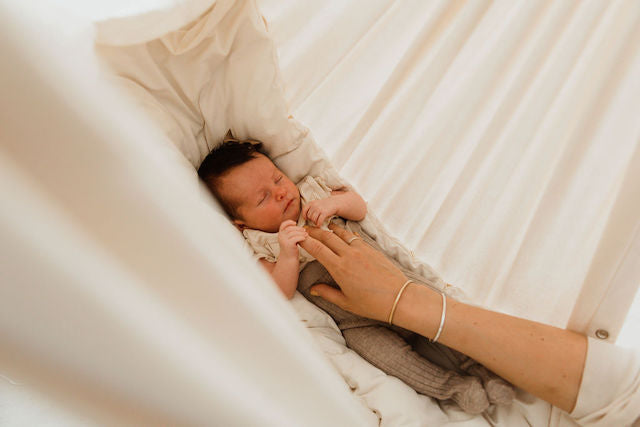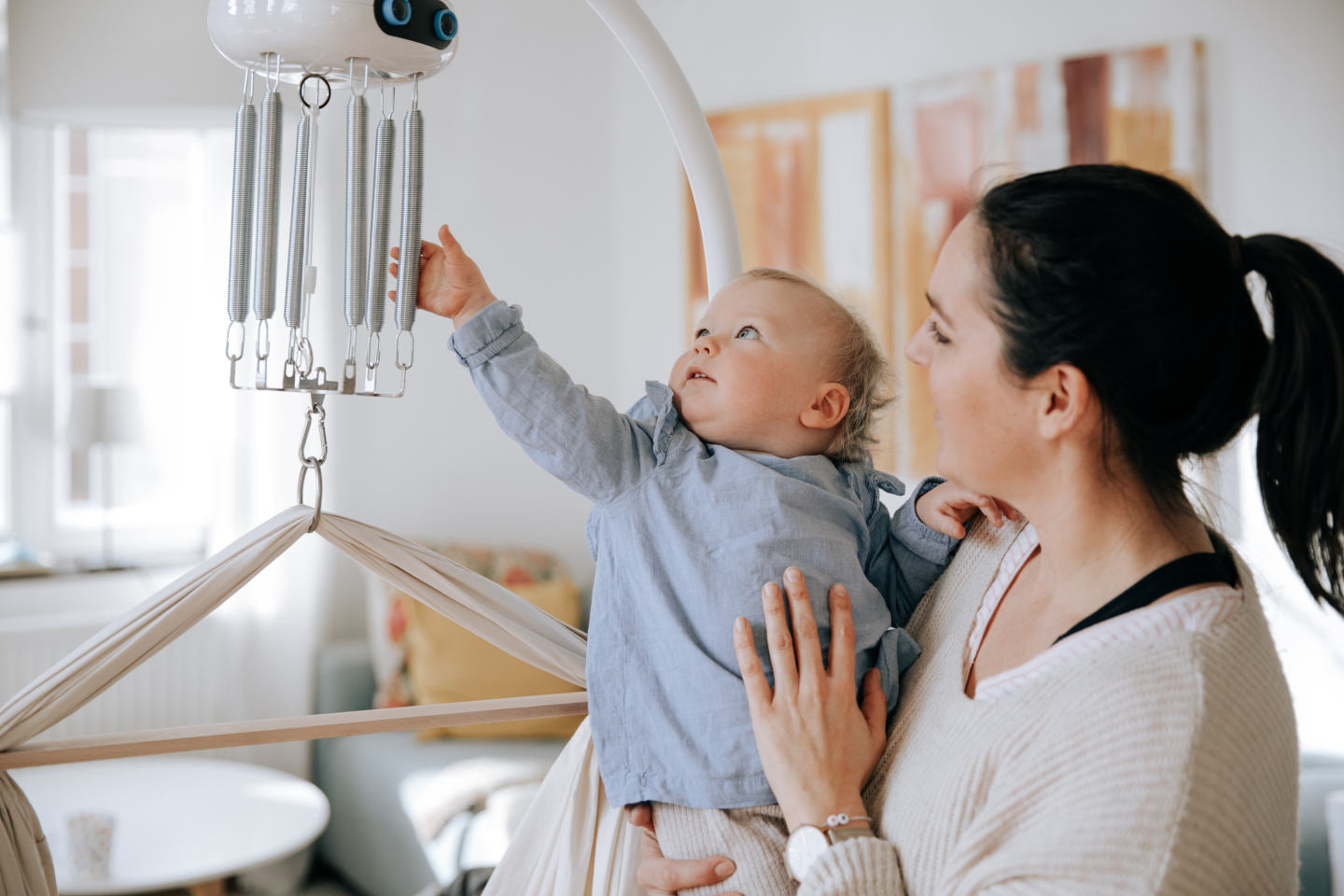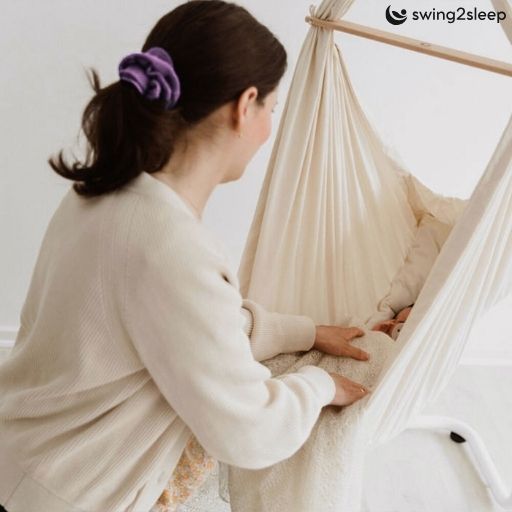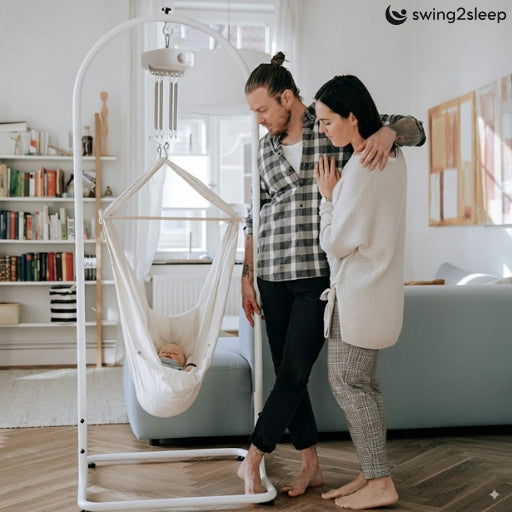


Many parents automatically associate a bassinet with the first time after birth. But what happens when the baby is no longer a newborn? When, months later, there are still difficulties falling asleep and sleeping through the night? When carrying, rocking and walking around all night have become part of everyday life?
Relief through a spring cradle at 14 months? Can this really work or is the right time long past?
Lack of sleep, physical exhaustion and emotional stress don't just affect the first few weeks. For some families, the real challenge only begins months later. When routines are missing, falling asleep only works with intensive support and parents reach their limits, the desire for a solution grows.
In this honest guest article, Michaela, Milan's mom, talks about exactly this journey. She talks about doubts, perseverance and the moment when she decided to use the bassinet after all, at 14 months.

A challenging start: life with a cry baby
"The second night in hospital was terrible. No matter what I did, Milan cried and screamed. At some point, I went out into the corridor with him and carried him. At some point he fell asleep from exhaustion."
This is how everyday life with her son began for Michaela and her family.
At first, there was talk of an "adjustment disorder". While searching for answers, Michaela came across the term "cry baby" on the internet and, in this context, swing2sleep.
The idea of a cradle came to mind. But as is so often the case, you initially hope that everything will settle down by itself. Maybe it's just three-month colic, maybe it will get better soon.
After three months, the diagnosis came: cow's milk intolerance. Having an explanation for the intense crying brought clarity, but there was still no chance of relaxed sleep. Milan only fell asleep with company. Carried in a Marsupi or in your arms, walking up and down the living room for hours on end was part of everyday life.
Day and night.
The lack of sleep sapped his strength. Meals were skipped, there was hardly any rest. At the same time, the idea that the child shouldnot be"spoiled" hovered in the air. The strain was not only physical, but also had an emotional and relationship-related impact.
At around six months old, Milan had become too heavy to carry permanently. An exercise ball was needed. Michaela and her husband sat on it for hours to rock their son to sleep. Unaccompanied, he could neither fall asleep nor sleep through the night.
Relief with a spring cradle at 14 months: A new attempt
It wasn't until he was 14 months old that the family took the plunge and tried the spring cradle. In the meantime, Michaela was pregnant again and the constant bouncing on the exercise ball was hardly physically possible. With his 9 kilograms, carrying him also became increasingly strenuous.
There was a lot of skepticism, especially at the first attempt. When Milan started crying as soon as he was put in, doubts arose. But they kept at it. On the third or fourth attempt, something unexpected happened: it worked.
"He didn't even grumble when he was put in. It was like a small miracle."
Gradually, Milan began to associate the cradle with falling asleep. After around six weeks, he slept through the night for the first time in his life and these nights became more frequent.
Today, the evening ritual is clear and calm. Milan is made ready for bed, placed in the swing2sleep and falls asleep there. He is then transferred to his bed. There are now even days when he falls asleep without being rocked or carried.
For Michaela and her family, this means one thing above all: relief.
"If I had the chance to turn back time, I would order the cradle immediately."
Thank you, dear Michaela Wildgruber, for your openness and trust in sharing your story.
Relief with a spring cradle at 14 months: Conclusion
This experience report makes it clear: sleep problems do not always simply disappear over time. Some families struggle for weeks, others for months and sometimes it feels like you're going round in circles.
Especially as a child gets older, the pressure from outside increases. "At 14 months it should have worked out by now." But development doesn't follow a calendar.
Michaela's story shows that it is still possible to relieve pressure with a bassinet at 14 months. The decisive factor was not the age, but the moment when the family was ready to make a change. Not out of convenience, but out of necessity.
Sleep is not a luxury. It is a basis for health, bonding and stability in everyday family life. When permanent exhaustion becomes the norm, it is okay to seek support. This does not mean that you have failed. It means taking responsibility, for yourself and for your child.
Perhaps the most important message of this experience report is therefore not only the relief provided by the cradle at 14 months. It is the realization that help can still be useful even when you think you have tried everything.
Sometimes relief begins exactly where you stop just hanging on.
You can find out more about the swing2sleep bassinet on our YouTube channel.
FAQ
Is a bassinet still useful at 14 months?
Yes, it can be. Even though many parents associate a bassinet with the newborn period, some children still benefit from the rhythmic movements later on. The decisive factor is not so much the age as the child's individual sleeping behavior and stage of development.
Will my child get too used to the bassinet?
A spring cradle can be a supportive bedtime ritual, but is no substitute for bonding or closeness. Many children use it as a transitional aid and develop additional strategies for falling asleep over time. As described in the experience report, sleeping habits can develop further, even if support is needed at first.
What if my child cries on the first attempt?
This is not unusual. New sleeping environments mean change. Some children need several attempts to get used to the bassinet. It is important to accompany the child gently and keep the situation calm. A single failed attempt says little about the long-term effect.
Can a bassinet help with a crying baby?
A feather cradle is not a medical remedy for excessive crying. However, it can help to calm the baby down through regular movements and clear rituals. Some parents report noticeable relief in everyday life, especially in the case of persistent sleep problems.