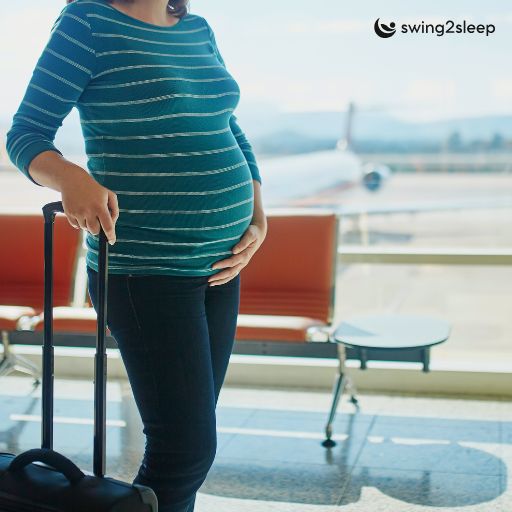


Are you planning one last vacation for two before your little miracle is born? Then you're not alone. Many couples want to take one last well-deserved "babymoon" before the birth.
But are you allowed to fly when pregnant? When is it safe to board a plane with a baby bump and when is it better not to? We have compiled all the information about pregnancy and flying for you.

Flying pregnant: When and for how long can pregnant women fly?
If you are pregnant for the first time, you may be wondering whether flying can harm your unborn child. After all, there are different pressure conditions on the plane and the radiation can also raise questions for expectant mothers.
In fact, there are recommendations from doctors as to when pregnant women can fly and when they should refrain from flying. We have organized these recommendations for you by trimester.
Flying pregnant in the first trimester (1st-12th week of pregnancy)
The first few weeks of pregnancy are a particularly sensitive time. The embryo is developing rapidly and is undergoing sensitive organogenesis in the first trimester. This is the critical phase in which many embryos are rejected as they are unable to develop due to a malformation.
The result is an abortion. This is why some gynecologists do not recommend flying in the first trimester, for safety reasons alone. The air you breathe on an airplane contains less oxygen. This could theoretically affect the well-being of the embryo.
However, we can give the all-clear. There is no link between air travel and miscarriage in the first trimester that has been proven by scientific studies.
So if, for example, you flew pregnant and didn't know you were pregnant at the time, you really don't need to worry. However, if you want to play it safe, you might just take a relaxing vacation by train or car in the first trimester.
Would you also like to prepare for your baby's arrival while on vacation? Then take a look at the swing2sleep cradle. Our miracle cradle allows your baby to sleep peacefully and relaxed in their little nest.
You place your baby in a cozy hammock: the intelligent spring cradle motor then rocks your baby to sleep with gentle up and down movements.
Flying pregnant in the second trimester (13-27 weeks' gestation)
The second trimester of pregnancy is usually perceived by many expectant mothers as the phase of pregnancy in which they are particularly active and feel good. Nausea, tiredness and listlessness from the first trimester have now disappeared and the critical phase of the fetus has also been overcome. The due date is still a long way off and you can enjoy your vacation to the full.
For many parents-to-be, the second trimester is therefore an ideal time to fly, also because everyday things such as putting on shoes or walking for long distances are possible without restrictions - despite your growing belly.
Flying pregnant in the third trimester (28-40 weeks' gestation)
From the third trimester onwards, many pregnant women experience more severe symptoms. The baby bump grows and so does the physical strain. Even if your little one is now really making itself felt, which is wonderful, everyday things become a little more difficult. Long walks are no longer possible and high temperatures in particular can put a strain on mother and child.
Air travel is therefore rather difficult in the third trimester and is not recommended by experts. Long-haul flights in particular are stressful for everyone - and even more so for pregnant women.
In addition, a premature, unplanned birth can occur in the last weeks of pregnancy. In the meantime, there is an increased risk that your baby will be born earlier.
This is why doctors do not recommend flying from 29th week of pregnancy. Therefore, try to avoid air travel during pregnancy during the first two trimesters.

Flying during pregnancy: what are the airline regulations?
In fact, some airlines no longer take heavily pregnant women on board in order to avoid a possible birth on board. However, the regulations of the individual airlines differ. It is therefore a good idea to check the website in advance if you are planning to fly during pregnancy.
Some airlines, for example, require a medical certificate from 28th week of pregnancy confirming an uncomplicated pregnancy before you can board.
Other airlines do not require this and others categorically do not take pregnant women on board from 24th or 26th week of pregnancy or the last trimester of pregnancy.
If in doubt, contact the relevant airline and find out what regulations apply. If a flight in the last trimester of pregnancy cannot be avoided, you should ensure the best possible preparation and communication.
What are the risks of flying during pregnancy?
There are a few things to bear in mind when traveling during pregnancy - especially when flying. There is a widespread belief that the reduced oxygen content in the aircraft cabin and exposure to radiation pose a risk to the unborn child.
However, studies show that the body can adapt very quickly to changes in pressure during pregnancy. High-altitude radiation is also relatively unproblematic for your baby.
However, the exposure on long-haul flights is significantly higher than on short flights - which is why you should refrain from frequent long-haul flights during your pregnancy. However, the Federal Office for Radiation Protection (BfS) gives the all-clear when it comes to a one-off long flight to a distant country.
However, it is important to note that pregnant women are generally at an increased risk of thrombosis due to their altered hormone balance. Sitting for long periods, whether on a plane or in the office, is therefore not recommended. You can wear compression stockings on a long flight, which are helpful for your veins and can minimize the risk.
Long periods of sitting can also quickly lead to water retention. This is why many doctors advise you to make sure you drink enough fluids during the flight and get up every hour to walk a few steps. Exercise is important to minimize the risk of thrombosis during a flight.
When is the best time to fly during pregnancy?
Every pregnancy is different, so there is no general answer to the question of when is the best time to fly. Many women still feel fit enough to travel by plane in the first few weeks of the last trimester.
Others, on the other hand, already have such a large belly that their freedom of movement is restricted and the narrow aisles and seats would be more of a burden.
Basically, it can be said that the second trimester is the best and safest time to fly for most expectant mothers. So if you are planning a babymoon in a distant country, we recommend booking it between 13th and 27th week of pregnancy.
To ensure that your last big flight as a couple is wonderful, carefree and relaxed, there are a few tips that you can follow as a pregnant traveler before and during the flight:
- Doctor's appointment: Make an appointment with your gynecologist shortly before your trip. This will allow your baby's development to be checked, any unanswered questions to be clarified and, if necessary, you will receive confirmation that you are fit to fly.
- Travel cancellation insurance: Travel cancellation insurance offers additional security if you are unexpectedly unable to travel and protects you from high cancellation costs.
- Maternity passport: Always carry your maternity passport with you during the entire trip and take a copy with you to be on the safe side. Airlines can see it at check-in or at the security checkpoint.
- Clothing: Wear loose, comfortable clothing in which you can move easily and which does not cut in.
- Compression stockings: Compression or thrombosis stockings reduce the risk of blood clots during the flight. It is best to try them on before you travel.
- Seatbelt position: Fasten the seatbelt below your baby's tummy. This is more comfortable and prevents pressure during turbulence.
- Fluids: Drink water regularly throughout the flight to support your circulation and blood flow.
-
Movement: Get up about once an hour and walk a few steps. An aisle seat makes it easier to stand up and helps to reduce the risk of thrombosis.
Conclusion: Flying pregnant
As you can see, if you follow these few tips and tricks, nothing stands in the way of you flying during your pregnancy. The risk of flying during pregnancy is present, but no more worrying than some other activities.
Take care of yourself and your body and don't do anything that could endanger your or your baby's health or make you feel uncomfortable. A vacation at home can also be relaxing, but if you feel confident flying while pregnant, we wish you a safe flight!
If you want to use the relaxing time on vacation to look around for a cradle for your baby, we recommend the swing2sleep cradle. It helps your baby to fall asleep better and promotes sleeping through the night. It has already inspired over 180,000 families and reduces stress for parents and babies.