

⏱️ Reading time: 7 minutes | 📚 Difficulty level: Easy
Many expectant mothers want to breastfeed their children after giving birth. However: Simply put the newborn on and the milk will flow? The reality is usually different. The vast majority of women first have to practise breastfeeding with their child. But don't worry: this is completely normal and natural. Breastfeeding takes strength, nerves, time, tears and patience at the beginning. Good breastfeeding preparation can help to make breastfeeding easier for you after giving birth.
💡 What is breastfeeding preparation? - Briefly explained
Breastfeeding preparation is the conscious physical and mental preparation for breastfeeding during pregnancy. It includes:
- ✓ Acquiring knowledge about breastfeeding techniques and positions
- ✓ Mental preparation for possible challenges
- ✓ Practical exercises and courses
- ✓ Building a supportive network
Breastfeeding preparation: Why breastfeeding takes time::/H2
No question: Breastfeeding is something completely natural. Human babies have been breastfed for thousands of years. However, this is why many people believe that it is a completely instinctive process that requires no preparation. Social media, films and series give us the additional impression that the mother should be able to breastfeed her child from the minute it is born. How natural.
This fuels expectations among pregnant women and new mothers that are not necessarily fulfilled in everyday life. The result: a sad, perhaps even stressed and disappointed mom in the postpartum. Yet breastfeeding can be such a wonderful thing. It just takes some practice and time. That's why good preparation for breastfeeding, especially one that takes place in the mind, makes sense.
What we can learn from other cultures::/H3
In many other cultures, especially among indigenous peoples, knowledge about breastfeeding and a healthy breastfeeding start is passed on from generation to generation. Mothers are often in the company of other mothers, learn from other women, breastfeed according to the child's needs and completely free of shame.
In our Western cultures, however, opinions differ when it comes to breastfeeding. Breastfeeding in public, for example, is still polarizing. In addition, pediatricians, scientists and other experts disagree on how long breastfeeding should be continued.
Last but not least, expectant mothers are often influenced by the opinions of others. Many parents-to-be have few role models and experience little support from the nuclear family regarding breastfeeding. There is also little communication about the specific challenges of breastfeeding. Very few women have the opportunity to observe a breastfeeding mother extensively before the birth of their first child. Deep-seated insecurities about this purely natural process have therefore been pervading our society and the female cosmos for decades.

What can good breastfeeding preparation look like?::/H3
Breastfeeding preparation does not mean that you have to do certain exercises or lubricate your nipples with certain products. Rather, it means acquiring basic knowledge. How do you latch on correctly? How exactly does the milk let-down reflex work? Why does milk let-down occur ? What could be the reasons why the child does not want to drink? The answers to these questions will give you certainty and self-confidence.
💡 Did you know that? 96% of all women can breastfeed! Less than 4% of women are unable to provide their child with breast milk With the right advice and sufficient information, you will most likely be able to breastfeed.
So knowledge is power - especially when it comes to breastfeeding. The fathers or your partner should also take the time to prepare for breastfeeding. After all, they will be directly involved in the breastfeeding period. They can therefore be a good source of support.
You have these 4 options when it comes to breastfeeding preparation:
1. books and websites on breastfeeding preparation::/H4
There are countless books on breastfeeding and ultimately you have to decide which one suits you best. We recommend, for example:
- "Breastfeeding: The companion book for a happy breastfeeding period - everything you need to know at a glance" by Vivian Weigert
- "artgerecht. The other baby book" by Nicola Schmidt (with great chapters on breastfeeding)
There are also suitable online sites such as Stillkinder.de or Still-Lexikon.de, which are certainly also good for preparation.
2. breastfeeding preparation courses::/H4
Many hospitals and midwives' practices now offer breastfeeding preparation courses in addition to the antenatal course. These are usually led by a midwife or breastfeeding consultant. You will be given knowledge and tips and can practise breastfeeding and latching on "dry". These courses are now also offered online, either in the form of live courses or in video format.
3. breastfeeding café::/H4
Talking about breastfeeding, taking the time to watch other mothers breastfeed and talking to role models and contact persons - all of this can be particularly helpful in preparing for breastfeeding. This is exactly what breastfeeding cafés are for, which are usually offered in hospitals or other social institutions. Pregnant and breastfeeding mothers come together and can talk about problems. There is usually also a midwife or breastfeeding consultant on hand to answer questions and share tips.
4. lactation consultant::/H4
Even before the birth, it is certainly beneficial to talk to a professional lactation consultant. They usually offer "packages" with pre- and postnatal care. You can ask your questions in advance and receive individual tips for a good and healthy start to breastfeeding. Once your child has arrived, the lactation consultant can also visit you at home to help you with any acute problems.

When is a good time to prepare for breastfeeding?::/H3
In the very last few weeks before the birth, you may be too excited to think about breastfeeding in peace. Your thoughts are more likely to be revolving around your baby's first kit or the checklist for your hospital bag.
We therefore advise you to at least start thinking about preparing for breastfeeding in the second trimester. In general, however, it is difficult to give a precise recommendation here. You set the pace and shouldn't stress yourself too much - there are already so many things to think about during pregnancy. Just feel inside yourself when you are ready to devote yourself to breastfeeding. This is also a good time to prepare for breastfeeding.
Bonding: preparing for breastfeeding directly after the birth::/H3
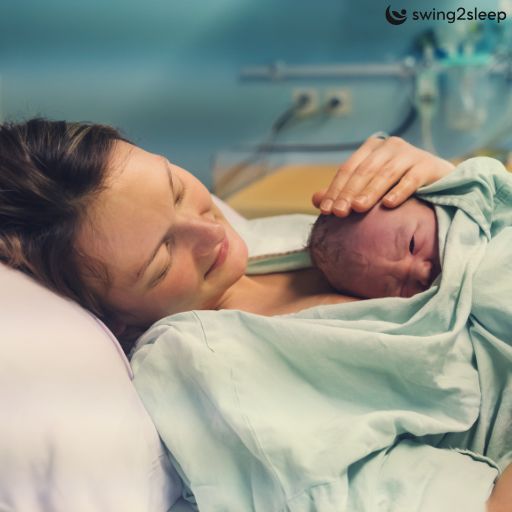
The first latch-on of the newborn, immediately after birth, with as much skin contact as possible, is a crucial moment between mother and child. The so-called bonding serves to build a bond between you and also has a positive influence on breastfeeding later on. This is because when your little one grasps the nipple and sucks rhythmically (and newborns usually do this quite instinctively), it begins to "activate" the breast. This stimulates milk production.
But don't worry: if direct latching on is not possible during the birth due to a caesarean section or other medical reasons, you can make up for the bonding. Even then, it is possible to establish a wonderful breastfeeding relationship. If in doubt, you will just need a little longer.
And as already mentioned, beautiful breastfeeding requires two things above all: patience and time.

The swing2sleep spring cradle: a feeling of security like in the womb::/H3
The gentle up and down movements of the swing2sleep spring cradle simulate the movements that your baby knows from the womb. This helps them to calm down, fall asleep more easily and process stimuli. It not only gives your baby a sense of security, but also gives you the important rest you need for your own recovery in the postnatal period.
Discover our spring cradles❓ Frequently asked questions about breastfeeding preparation
When should I start breastfeeding preparation?
The best time to prepare for breastfeeding is the second trimester (13-28 weeks' gestation). In this phase you are not yet too exhausted, but you have enough time to prepare yourself mentally and practically. Many breastfeeding preparation courses take place between the 25th and 30th week of pregnancy.
Is a breastfeeding preparation course really necessary?
A breastfeeding preparation course is not absolutely necessary, but it is highly recommended. 96% of all women can breastfeed, but the right technique and knowledge of typical challenges make it much easier to start breastfeeding. The course gives you confidence and practical practice opportunities.
How can I prepare my nipples for breastfeeding?
No special preparation of the nipples is necessary. Previously recommended hardening methods are outdated and can even be harmful. It is more important to position the baby correctly. If you have flat or inverted nipples, a breastfeeding consultant can give you individual tips.
How much does a professional breastfeeding consultation cost?
The cost of a breastfeeding consultation is often covered by health insurance, especially if there is a medical indication. Private breastfeeding consultants charge between 50-120€ per consultation. Many midwives offer breastfeeding counseling free of charge as part of aftercare.
Can I breastfeed successfully without preparation?
Yes, it is possible, but good preparation significantly increases the chances of success. Studies show that prepared mothers have fewer breastfeeding problems, breastfeed for longer and experience less stress in the early days. Investing in good breastfeeding preparation pays off.
What are the most important breastfeeding positions I should know?
The most important breastfeeding positions are the cradle position, the back position (football position), breastfeeding lying down and the reclined position (lay-back nursing). Each position has its advantages and it's good to know several so that you can react flexibly to different situations.
Note: This article does not replace medical advice. If you have any breastfeeding problems or uncertainties, please contact your midwife, lactation consultant or paediatrician.
Photo by Timothy Meinberg on Unsplash
Photo by Luiza Braun on Unsplash
Photo by Wes Hicks on Unsplash