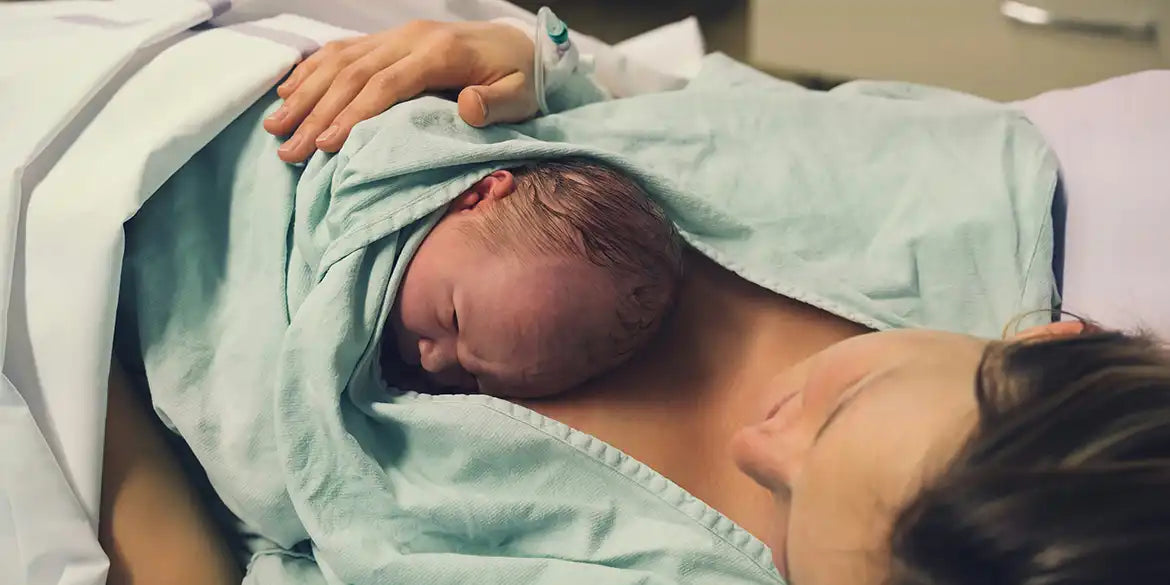



In our society, motherly love is considered to be the strongest and purest love of all. However, some mothers do not feel this love for a variety of reasons. This can have far-reaching consequences for affected children, who can be burdened well into adulthood.
Without the unconditional love of the parental home, basic human trust can be deeply disturbed. This can result in a lack of self-confidence, anxiety disorders and a lack of emotional control.
The taboo topic of regretting motherhood has seen an upswing in social media and more and more mothers are daring to talk about their negative feelings.
But does the movement of regretting mothers equate to a lack of motherly love? We have taken a closer look at the topic and summarized it for you in this article.
What is a lack of motherly love?
Definition: Lack of maternal love refers to the absence of a natural emotional bond between mother and child. This can be caused by mental illness (postpartum depression), traumatic experiences or excessive demands and often leads to lifelong consequences such as attachment disorders, anxiety disorders and a lack of self-esteem in the child.
Lack of maternal love: where does it come from?
Mothers who don't love their children. That sounds wrong and cruel. We immediately conjure up images of women who abuse their offspring - physically or emotionally. But experts warn against such associations. These are usually horrible extreme examples, but they tend to be the exception.
In fact, the phenomenon of a lack of maternal love is more widespread than you might think. In most cases, women who do not feel motherly love have a serious psychological condition or even a personality disorder. They are quite capable of love, but also vulnerable and downright overwhelmed with the responsibility for their child.
As a result, they reach their mental and physical limits and switch into emotional survival mode. This can lead to the feeling that unconditional maternal love is lacking.
There are many reasons for a lack of maternal love
The reasons for a lack of maternal love can be manifold and must be examined individually. For example, if your own mother did not experience love and affection in her childhood, she may pass on what she experienced to her child.
This usually happens unconsciously and usually when the childhood trauma has not been treated psychologically. At the same time, however, this does not mean that women with an unloving mother will be exactly the same and will not feel any motherly love .
There may be other reasons why healthy and emotionally stable women do not feel motherly love. If women experience the birth as traumatic or not self-determined, they may try to distance themselves emotionally during and after the birth.
Some mothers, for example, who give birth to a child that has to fight for its survival immediately after delivery, may also turn away from their feelings in order to protect themselves. A lack of maternal love can therefore be due to a variety of causes.
Relief for overburdened parents
If the strain becomes too great, practical aids can help to give the baby and parents some much-needed rest.
Discover the spring cradle now
Postpartum depression: a widespread phenomenon
Other women struggle with severe postpartum depression. They are often unable to respond empathetically to their child and suffer from deep sadness, anxiety and indifference.
They feel guilty for finding it difficult to care for their child, struggle with their own expectations of being a perfect mother and break down over their perceived failures.
Motherhood brings them to the brink of mental and physical exhaustion. A crying, small child then becomes an extreme stress factor that they want to stay away from. One strategy is to meet the child with emotional coldness in order to avoid having to build up an attachment as a caregiver.
If the mother is emotionally overwhelmed and possibly suffering from postpartum depression, her confidants should help her. Talking to a midwife or even a therapist can help to understand and treat the depression.
Especially Crying babies can push mothers to their limits. Our spring cradles have already helped over 130,000 families find peace of mind.
Good to know: Postpartum depression affects around 10-15% of all mothers. It is a treatable condition and not a personal weakness. Professional help can make all the difference.
The effects and long-term consequences of a numb mother
Parental love, tenderness, the feeling of warmth and care - these needs are among the so-called basic needs of children and are also largely a basic need in later life. If there is a lack of motherliness, this clashes with the need for motherly love and can form the basis of trauma.
We humans need contact and affection from our first breath, especially from our parents, in order to grow into self-confident personalities and to be able to trust our environment later on. If this is not the case, adults can still suffer.
Below we have summarized the most common signs and consequences of a lack of parental love.
The swing2sleep cradle: a feeling of security like in the womb
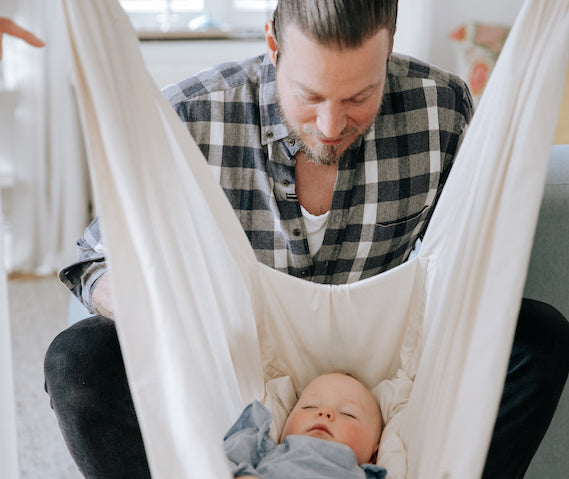
The gentle up and down movements of the swing2sleep spring cradle simulate the movements that your baby knows from the womb. This helps them to calm down, fall asleep more easily and process stimuli. It not only gives your baby a sense of security, but also gives you the important rest you need for your own recovery in the postnatal period.
1: Lack of self-esteem and deep insecurity
"I'm not good enough" - this feeling often occurs in children who have experienced little affection and love at home. Deprivation of love and the lack of physical contact appear to the child as a presumably just punishment, as they are not perfect or perfect - they consider themselves unlovable.
The lack of self-esteem and self-awareness can also lead to the child often not saying "no" or not being able to set boundaries for themselves because they have a deep fear of rejection. This is accompanied by a strong feeling of insecurity.
Behaviors that such children are prone to include, for example, a tendency towards hasty self-defense or quickly withdrawing from conflict situations. The children often isolate themselves quickly in everyday life and find it difficult to find access.
2: Loneliness
Keyword: isolation. This is also a widespread and not to be underestimated consequence of a lack of maternal love and parental affection in childhood. Social skills are usually less developed in the affected children and so they hardly let anyone get close to them. The self-built emotional shell serves as a safe retreat, as the children have the feeling that they are not loved anyway.
At the same time, neglected children often show little understanding for other people's feelings. This can also lead to problems and conflicts in the social environment, which could be attributed to a lack of maternal love.
3: No trust and closed-mindedness
If the child's basic trust is disturbed by a lack of maternal love, it is often difficult to build trust in other people later on. Affected children do not learn that people want to do something good for them.
They are often withdrawn, do not allow others to get close to them and have a pronounced lack of trust. Problems are usually dealt with internally and remain hidden from outsiders.
This can lead to relationship problems with other people, at the latest in adolescence and adulthood. Those affected often find it difficult to form close friendships or intimate relationships. Anyone who has a narcissistic mother can therefore suffer from it for the rest of their life.
4: Anxiety disorders
Love and care strengthen self-confidence. If this vital experience is lacking, this can lead to exaggerated anxiety, anxiety disorders and panic attacks as early as childhood.
This pattern usually continues into adulthood. Even simple and seemingly banal decisions and everyday situations cannot be resolved by those affected.
This disproportionate anxiety can even intensify over time as everyday challenges increase.
5: Lack of emotional control
When children grow up in a stable environment, their upbringing teaches them how to deal with their own feelings, as well as the feelings of others.
If this stability is lacking, many affected children find it difficult in later life to recognize their own emotions or to act in accordance with social norms.
This results in a lack of empathy. Similarly, impulsive outbursts and confrontations with the social environment can occur without any real reason.
This often leads to problems at school or in later professional and private life. A lack of maternal love in childhood can therefore also have a major impact on adults.
6: A tendency towards toxic relationships
A lack of maternal love has an enormous influence on the rest of life and on how relationships are formed. People who have had these negative experiences in childhood are at risk of repeating learned patterns later on and entering into unhealthy relationships, for example.
In the worst case, they allow themselves to be mistreated or even psychologically and/or physically abused by their partner. On the one hand, because they don't know any different from their childhood. On the other hand, because their lack of self-confidence leads them to believe that they deserve this bad treatment.
The consequences for children who grow up without a mother's love can therefore be quite serious.

Summary: The 6 most important long-term consequences of a lack of motherly love
- Lack of self-esteem: "I'm not good enough" feeling
- Loneliness & isolation: Difficulty forming social bonds
- Trust issues: Impaired basic trust, mistrust of others
- Anxiety disorders: Exaggerated anxiety up to and including panic attacks
- Emotional dysregulation: Impulsive outbursts, lack of empathy
- Toxic relationship patterns: repetition of unhealthy attachments
✅ The good news is that these consequences can be treated and overcome with professional help.
What are the consequences of a lack of maternal love into adulthood?
There can be many reasons for a lack of maternal love. The consequences and effects on the child, even in later adulthood, are far-reaching. This makes it all the more important that those affected get help.
Because the good news for families is that birth trauma or postpartum depression in particular can be treated with the right psychological support. Those affected just need to take the step of seeking help.
Relief for overwhelmed parents: When the strain becomes too much, practical aids such as our swing2sleep spring cradle can help to give the baby and parents some much-needed rest. Read testimonials here from parents who have overcome similar challenges.
Help is available here:
- Beratungsstelle für Natürliche Geburt und Elternsein e.V.: Independent point of contact for all matters relating to becoming and being parents.
- Schatten und Licht e.V.: Information & help for postpartum depression with a forum for those affected and relatives to exchange ideas.
- Emotional First Aid (EEH): Program for emotional support for pregnant women and parents-to-be.
- Nationales Zentrum Frühe Hilfen (NZFH): The NZFH is run by the Federal Centre for Health Education (BZgA) in cooperation with the German Youth Institute (Deutsches Jugendinstitut e.V.).
💚 Important to know: Seeking help is a sign of strength, not weakness. Every family deserves support and there are people who want to help.
This article does not replace professional medical or psychological advice. If you have acute problems, please contact one of the counseling centers mentioned or your doctor.